Custom Plates NY options cover picture plates, professional plates, and organization designs that replace the standard artwork on a New York registration. More than 200 designs are available, ranging from sports teams and colleges to state regions, charities, and licensed professions. Vehicle owners review eligibility rules, design requirements, and yearly fees before placing an order, since some plates need proof of membership or a professional license. This page covers the ordering process, the costs involved, and the restrictions the DMV applies to every design.
Custom plate charges sit on top of a regular registration renewal, and the DMV bills them every two years. A picture plate with an assigned number costs $60 initially with a $31.25 renewal, and adding a personalized number raises the price to $91.25 initially and $62.50 yearly. Orders go through the DMV online transaction, by phone, by mail with form CP-30, or in person at an office, and each route ends with the same review by the Custom Plates Unit.
Custom Plates NY at a Glance
The details below cover what a custom plate is, who can order one, and what it costs. They apply to picture plates, professional plates, and organization plates alike, with the exception of a few designs that can only be ordered through the sponsoring group.
How to Order Custom Plates in New York
Every route below ends with the same review, and the DMV checks eligibility before it produces the plate. The steps run in the order the Custom Plates Unit works through them, so a missing document at any point delays the whole order and sometimes cancels it outright.
-
Confirm your registration is active
A custom plate is issued to an existing registration, so the registration must be current and must not expire within 60 days. Renew it first if the expiry date sits inside that window, and make sure the name and address on the record are up to date, since the plate is mailed to the address on file.
-
Pick a design from the catalog
Browse the picture and professional plates the DMV lists, then note the design name and its category. Some plates are open to any registrant, and others are restricted to members of a group, holders of a professional license, or veterans of a branch of service.
-
Gather proof of eligibility
Professional plates need a copy of the license, certification, or registration certificate that proves the qualification. Organization and cause plates usually need a letter on the sponsoring group’s letterhead, and military plates need a DD-214 or an equivalent certificate of service.
-
Choose an assigned or personalized number
An assigned number costs less and arrives faster, since the DMV picks the combination. A personalized number lets you choose two to six characters, and the combination must clear the availability check before the plate is produced.
-
Place the order and pay
Order online through the DMV transaction, by phone with the Custom Plates Unit, by mail with form CP-30, or at a DMV office. Pay the purchase charge at the time of ordering, and expect the renewal charge to be added to your next registration bill.
-
Wait for the documents, then the plates
New registration documents showing the new plate number usually arrive within about ten days of processing, and the physical plates take eight to ten weeks. Keep driving on the old plates until the new set arrives, and destroy the old plates once the swap is complete.
- New York DMV custom and picture plates:
- dmv.ny.gov/plates
- Application for Custom Plates, form CP-30:
- dmv.ny.gov/forms
Types of Custom Plate Designs
Designs fall into a handful of groups, and the group decides both the price and the paperwork. The list below covers what each group offers and what the DMV asks for before it issues the plate.
Picture and Cause Plates
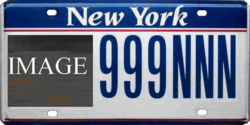
These carry a logo or image for a charity, a cause, or a state program, and they are open to any registrant who pays the design fee. Several route part of the yearly charge into a state fund, such as conservation work, cancer research, or the World Trade Center memorial scholarship, so the renewal supports the cause the plate represents.
Professional Plates
Reserved for licensed and verified occupations such as physicians, nurses, physician assistants, and emergency medical workers, plus volunteer firefighters and ambulance crews. The registration must sit in the qualified person’s name, and proof of the license or certification goes to the Custom Plates Unit with the application.
Sports, College and Regional Plates
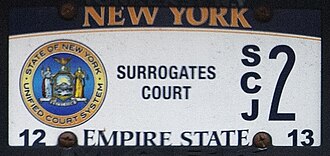
Team plates cover professional franchises and college programs, and regional designs celebrate New York City, Long Island, the Adirondacks, and the Capital Region. The Long Island plate earned a national best-plate award for its Montauk Point lighthouse image, and several team designs belong to the best-selling group the DMV reports each year.
Picture and Cause Plates in Detail
Picture plates exist since the state lets outside groups sponsor a design. A charity, a college, a sports franchise, or a state agency submits artwork, the DMV approves a print-ready version, and the plate then goes on sale to any registrant who wants it. The purchase price is set by the state rather than by the sponsor, which is why a picture plate costs the same whether the artwork belongs to a large national charity or a small county historical society.
Several designs send part of the yearly renewal into a dedicated fund. Conservation plates support environmental programs, cancer plates support research, and the World Trade Center memorial plate supports a scholarship fund. The renewal charge is the same regardless of the fund, so the plate works as a small recurring donation rather than as a premium product. Drivers who want a design that carries no fee into a fund should look for plates marked as general issue rather than as cause plates.
How the Artwork Is Produced
Approved artwork is printed onto reflective sheeting and then stamped or embossed so the number stays legible. Fine detail does not survive that process well, which is why sponsors are asked for simplified logos with strong contrast. A design can be revised or withdrawn if the printed result does not read clearly at a distance.
Where the Catalog Comes From
Most designs reach the catalog through a sponsor rather than through the state. A charity, a college, a sports franchise, a union, or a state agency submits artwork and a proposal, and the Custom Plates Unit reviews it against readability and policy rules. Designs that pass review go on sale to any qualifying registrant, and a fixed share of each renewal can be directed to the sponsor’s fund. The catalog grows slowly, since each design needs a base of orders large enough to justify a production run at Corcraft.
Professional and Organization Plates
Professional plates work differently from picture plates since the state restricts who may display them. A physician, a nurse, a physician assistant, or an emergency medical worker applies with proof of the license that makes them eligible, and the registration has to be in that person’s name rather than in the name of a spouse or a business. Volunteer firefighters and ambulance crews follow a similar route with a letter from their chief or squad.
Organization plates sit between the two. A union, an association, or a society sponsors a design, and members order through the group or through the DMV with a letter confirming membership. since the sponsoring body has to keep its membership records current, the DMV asks the group to report changes, and a design can be discontinued if the group can no longer be reached.
Why Eligibility Is Checked Twice
The Custom Plates Unit reviews the application first, and the registration record is checked again when the plate is produced. A registration held by two people, or one held by a business, can stall the order even when the applicant is qualified. Keeping the registration in the qualified person’s name from the start removes the delay.
How Membership Records Are Checked
Organization and professional plates depend on records the sponsor keeps. When a plate is ordered, the Custom Plates Unit compares the application against the group’s membership list or against the license you hold. A union that stops reporting changes can lose its design, and a member who leaves the group is expected to return the plate. The check protects the meaning of the plate, since a design that any driver could buy would carry no signal about who is behind the wheel.
What Custom Plates Cost in New York
The purchase charge is paid once when the plate is ordered, and the renewal charge repeats with every registration cycle. Personalizing the number adds to both figures, and the renewal is billed alongside the registration rather than as a separate notice.
| Plate option | Initial purchase | Annual renewal |
|---|---|---|
| Custom picture plate, assigned number | $60.00 | $31.25 |
| Custom picture plate, personalized number | $91.25 | $62.50 |
| Personalized number on a standard plate | $31.25 – $62.50 | $31.25 – $62.50 |
| Replacement of a custom plate | $25.00 | — |
| Special event or production plate | Varies | Varies |
The renewal figure sits on top of the registration renewal, so a two-year bill combines both charges. A plate ordered by mail follows the same fee schedule as one ordered online, and the DMV does not refund the design fee when a plate is returned. Replacing a damaged custom plate costs $25, which is the same as any other replacement and does not depend on the artwork.
Custom Plates and Personalized Plates
A custom plate changes the artwork on a plate, and a personalized plate changes the characters printed on it. The two can be combined: a picture plate can carry a chosen number for the higher fee, and a standard plate can carry a chosen number with no design change at all. Knowing which part you want avoids paying twice, since the personalization charge repeats every year on top of whatever design you selected.
Drivers who only want a memorable number should start with the standard series, which keeps the purchase price low and adds only the personalization charge. Drivers who want a specific look, such as a college or a regional design, should start with the design and decide afterwards whether the number matters enough to pay the higher purchase and renewal figures.
Character Rules for Custom Plates
The DMV reviews every requested combination and is not obliged to issue it. Three letters followed by four numbers, and five numbers followed by two letters, are reserved for standard issue, so a request such as ABC1234 is refused even when the design itself is allowed. Spaces count toward the character limit, a working range of two to six characters applies to most passenger plates, and a single state image may be placed anywhere except the first or last position. A refusal is not a rejection of the applicant, and a second choice can be submitted at no added charge.
Artwork and Manufacturing Rules
Artwork has to survive the way plates are made, which puts limits on what a design can carry. Plate numbers are stamped or embossed into metal covered with reflective sheeting, and a busy image behind the characters makes the number harder to read. Sponsors are asked for artwork with a clear focal point, strong contrast against the background, and no thin lines that would disappear once printed. The state reserves the right to adjust a design before production, and it will decline artwork that could be mistaken for an official government mark.
Ordering a Second Choice After a Refusal
A refused combination does not end the application. The DMV allows a second choice, and the fee already paid covers a reasonable number of resubmissions as long as the order stays open. Drivers who want a specific phrase should prepare two or three backups before ordering. A combination that imitates a standard series, or one that reads as an official mark, will be refused a second time, so a backup should steer clear of those patterns as carefully as the first choice did.
Choosing the Right Design for Your Vehicle
Vehicle class narrows the choice more than most drivers expect. Passenger plates accept the widest range of designs, commercial and trailer plates draw from a smaller set, and motorcycle plates use a shorter series with its own artwork. Trailers are issued a single rear plate and cannot take a design that only exists in the passenger range, and a plate ordered for the wrong class will be refused at the counter rather than produced. Checking the class shown on the registration certificate before ordering saves a wasted application.
Common Mistakes When Ordering a Custom Plate
Most failed orders come down to timing and paperwork rather than to the design. Applying and the registration is within 60 days of expiring, sending a copy of a license that has already lapsed, or using a form of the sponsor’s name that differs from the DMV record all cause a delay. Ordering a personalized number without checking availability first is the other frequent problem, since a combination already on the road cannot be reissued and the request has to be replaced with a second choice.
Plates for Trailers and Motorcycles
Not every vehicle class draws from the full catalog. Trailers receive a single rear plate and a smaller set of designs, and motorcycles use a shorter series with a face sized to the bracket. A custom design ordered for the wrong class is refused at the counter rather than produced, and the application has to be rebuilt for the correct class. Reading the class code printed on the registration certificate before ordering keeps the request inside the range the state will actually issue.
Custom Plates and the Registration Behind Them
A custom plate is an attachment to a registration, and the registration record decides whether the order can move at all. The plate number is printed on the registration certificate, the sticker that carries the term is matched to it, and the renewal notice quotes the plate charge against that same record. A driver who sells the car cannot hand a custom plate to the buyer, since the design and the number belong with the registration that ordered them. When the registration closes, the plate comes back to the DMV or is destroyed, and the design returns to the catalog for the next driver who wants it.
Renewing a Vehicle That Carries a Custom Plate
A renewal keeps the design in place and repeats the plate charge for another two-year term. The notice combines the registration fee for the class, the custom plate renewal, and the personalization figure when a chosen number sits on the design. Inspection has to be current and insurance has to cover the term before the renewal clears. A driver who no longer wants the design can drop it at that point, and the plate reverts to the standard series with its lower renewal.
Selling a Car With a Custom Design
The plate does not travel with the car. The seller removes the set, cancels the registration, and surrenders the metal with form PD-7. The buyer registers the vehicle and receives a standard plate or orders a design of their own. A custom plate kept on the wall after the registration closes is a keepsake rather than a registration mark, and it must never go back onto a vehicle.
Replacing a Damaged Custom Plate
A custom plate that is cracked, faded, or peeling is replaced for $25, the same figure that applies to any other set, and the design and number are reissued together. A plate whose reflective coating is lifting may qualify for a free exchange instead, and the DMV prints the conditions on its plate pages. A damaged set should come off the vehicle once the replacement is ordered, since a plate that no longer meets the readability rule can draw a stop.
Frequently Asked Questions
These answers cover the questions drivers ask most often about custom plates in New York, from the purchase price and the renewal charge to eligibility, delivery time, and the rules that decide whether a design is approved.
How Much Does a Custom Plate Cost in New York?
A custom picture plate with an assigned number costs $60 at purchase with a $31.25 annual renewal, and personalizing the number raises that to $91.25 at purchase and $62.50 yearly. Both figures sit on top of the regular registration renewal, and the DMV bills the plate charge every two years with that renewal.
Who Is Eligible to Order a Custom Plate?
Picture and cause plates are open to any registrant with an active New York registration. Professional plates require a license, certification, or membership, military plates require a DD-214 or equivalent proof of service, and organization plates go through the sponsoring group with a letter confirming membership.
How Long Does a Custom Plate Take to Arrive?
The DMV asks drivers to allow eight to ten weeks for the plates to be manufactured and delivered. New registration documents showing the new plate number arrive within about ten days of the order being processed, ahead of the physical plates.
Can a Custom Plate Number Be Refused?
Yes. Three letters followed by four numbers, and five numbers followed by two letters, are held for standard issue, and any combination the DMV considers offensive, misleading, or hard for a plate reader to interpret can be declined. A refused request costs nothing, and a second choice can be submitted.
Can You Order Custom Plates by Mail or by Phone?
Both routes are open. Mail form CP-30 with the required documents and payment to the Custom Plates Unit, or call the unit to place the order by phone. Plates that need proof of a professional license or of association membership are usually handled by the unit rather than at a local DMV office.