New York issues a plate set to last about a decade, and a plate can leave the road long before that. It can fall off in a car wash, get lifted from a parking lot, or lose the reflective film that keeps the characters readable. The DMV treats each case a little differently, and the paperwork follows the reason for the request. A stolen plate needs a police report, a lost plate needs a replacement order, and a worn plate needs a new set. Getting the reason right the first time saves a trip.
A replacement set costs $25 in the ordinary case, and the new plates arrive with the same registration but often with a new number. Personalized plates are handled differently, since the combination belongs to the owner and can usually be reissued. A plate that was stolen is replaced at no charge when a police report backs the claim. The DMV prints new registration documents with the new number, and the old plates come off the moment the new set is mounted. Insurance, toll accounts, and parking permits all need the update.
Lost, Stolen or Damaged Plates
The three cases share a form and a destination but not a price. A lost plate is a simple replacement, and the driver pays the standard charge. A stolen plate is a police matter first, and the documented theft removes the fee. A damaged plate sits between the two: the state replaces it for the usual charge except when the damage came from a defect the DMV accepts as its own fault. Sorting the case before placing the order keeps the paperwork clean.
Reporting a Stolen Plate to Police
A stolen plate has to be reported to a police agency before the DMV will treat it as a theft. The officer files form MV-78B, which records the plate number, the date, and the facts of the theft, and the driver keeps a copy. The report protects the owner as much as the state: a plate used in a crime after it was taken can point back at the registered owner, and the filed report shows the plate was out of that person’s hands. Report the theft within a few days of noticing it.
Form MV-78B and the Free Replacement
Form MV-78B is the police report that supports a stolen plate claim, and it is the document that removes the replacement charge. The driver takes the report to a DMV office or sends it with the replacement request, and the DMV issues a new set at no cost. The form covers stolen plates and other stolen items tied to the vehicle. Without the report, the DMV treats the request as a lost plate and charges the standard fee. Keep the copy with the vehicle records instead of leaving it in the glovebox.
Replacing a Lost Plate for $25
A lost plate is handled as a plain replacement. The owner files a request online, by mail, or at a DMV office, pays the $25 charge, and receives a new set. The registration stays in force through the swap, and the new plates carry a fresh combination in most cases. A driver who wants the old number back can ask about it, though the state usually issues new characters for a replacement set. One plate lost from a pair still means a new pair, since the DMV does not match a single plate to a used one.
Peeling and Aged Plates
A plate that has lost its reflective film is a safety problem rather than a paperwork problem. The film lifts around the embossed characters first, then spreads across the face until whole patches of the number disappear. An officer who cannot read a plate has a lawful reason to stop the car, and a toll camera gives the same result: an unreadable plate leads to a bill that goes to the wrong address or does not get paid. New York has replaced early failures at no charge when the film came apart within a few years of issue.
The Ten-Year Replacement Cycle
New York reissues its standard plate about every ten years, and the state ties the cycle to reflectivity rather than to style. The reflective film is guaranteed for only about five years of normal use, which is why a plate that has been on the road for a decade gets replaced even when it looks intact. The 2020 change to the Excelsior design was tied to that cycle, and drivers whose plates were at least ten years old received the new base on renewal. The policy keeps the fleet readable for cameras and officers.
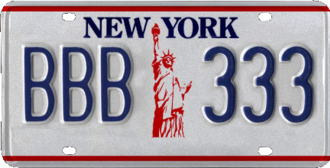
A driver does not have to wait for the ten-year mark to swap a plate. A damaged set can be replaced at any time for the $25 charge, and the registration simply moves to the new number. Replacing early is a choice, and the state does not refund part of the fee when a plate is turned in before its time.
After the Replacement Is Ordered
The rule depends on what happened to the old plate. If a plate is peeling but still legible, the car can stay on the road as long as the replacement order is being processed, since the registration remains valid. If a plate was lost or stolen, the car should not be driven without plates, and a driver who is stopped may have to show the police report and the replacement paperwork to cover the gap. Ask the DMV office whether a same-day set or a temporary document can be issued, and keep every receipt in the vehicle.
Replacing a Custom or Personalized Plate
Custom picture plates and personalized plates follow the standard replacement process with one extra step: the design and the combination have to be checked before the new set is printed. A personalized number usually returns to the same owner, and a picture plate is reprinted in the same design when it is still offered. The table below shows what carries over.
| Plate type | Can the number stay | What to expect |
|---|---|---|
| Standard series | Sometimes, when the combination is free | A new pair for $25 |
| Personalized plate | Usually yes, for the same owner | Reissued with the personalization fee |
| Custom picture plate | Yes, when the design is still offered | A reprint in the same design |
| Specialty or professional plate | Yes, when eligibility still holds | Proof of membership may be requested |
| Motorcycle plate | Yes, when the series allows | A single smaller plate |
A driver who has moved or changed names should update the registration before ordering, since the plate is mailed to the address on file. Renewing the personalization at the same time avoids two separate transactions, and a plate that needs proof of membership waits until that document is in hand.
Keeping the Same Plate Number
A replacement normally brings a new combination, and a driver who wants the old characters back has to ask. The steps below cover how to request the same number, what the DMV checks first, and what happens when the combination cannot be reissued.
-
Ask before the order is placed
The request for the same number goes in with the replacement order, not after the plates have been printed. A clerk can check whether the combination is still tied to the owner’s record. Once a new set ships, the swap has been made and the old characters are released.
-
Show that the number belongs to you
The DMV keeps the combination with the registration and the owner. A driver who has held the plate for years and has the registration document to prove it has the strongest claim. A number on a vehicle that was sold and surrendered returns to the pool.
-
Check availability for a custom number
A personalized combination stays with its owner as long as the personalization fee is paid, so a renewal keeps the plate alive. Let the fee lapse and the number can be issued to someone else. Asking for the same characters on a replacement works only when the record shows an active personalization.
-
Pay the charges that apply
A standard replacement costs $25, and a personalized set adds the yearly personalization fee of $31.25 to $62.50. A stolen plate documented by a police report carries no replacement charge. The DMV does not discount a replacement for a driver who wants the old number back.
-
Update the records once the new set is mounted
Move the insurance, the toll accounts, and any parking permit to the new plates. Mount them 12 to 48 inches from the ground and destroy the old pair so it cannot be reused. Keep the new registration document in the car and check that the number matches the plates.
- New York DMV replacement plates:
- dmv.ny.gov/plates
- Police report for stolen plates, form MV-78B:
- dmv.ny.gov/forms
- Plate surrender, form PD-7:
- dmv.ny.gov/plates
What to Do With a Plate You Find
Plates turn up in parking lots, on the shoulder of a highway, and at the back of a garage. A plate that belongs to someone else should go back to the DMV rather than onto a shelf. Turn it in at an office or mail it to the address listed on the DMV plate page, and note the number if the plate could be tied to a crime. Keeping a plate that is not yours serves no purpose, since a surrendered plate is destroyed and the number is retired.
Transferring Your Registration to New Plates
Once the replacement order is placed, the work moves from the DMV counter to the rest of your accounts. The new plates carry the registration, but the list of places that know your old number is longer than most drivers expect. Insurance files, toll accounts, parking permits, and a garage lease all point at the plate. Updating each one after the new set is mounted closes the gap that a stolen plate can slip through. Treat the swap as a small project rather than a single errand, and keep a note of each change.
Updating insurance and toll accounts
Call your insurer after the new plates are on the car and ask for the policy to show the new number. Do the same for any toll account that bills by plate, since a camera reading the old number can send a charge to a closed account. A parking permit tied to a plate needs a fresh record at the office that issued it. Keep the confirmation from each update with the registration. A plate number left in a system for months is a chance for a stray ticket to land on your name.
Surrendering plates with Form PD-7
Some plates have to go back to the state rather than into a drawer. Form PD-7 is the plate surrender document, and the DMV uses it to record that the number leaves the road. A driver who turns in a set without the form may still show as the holder of a plate that someone else found. Complete the form, hand the plates to an office or mail them as directed, and keep the receipt. A surrendered number is retired, so it cannot be reused on another vehicle.
Driving Until the New Set Arrives
A legible but worn plate lets the car stay on the road during the wait, since the registration is still valid. A lost or stolen plate leaves the car bare, and driving that way invites a stop. Carry the police report for a theft and the order receipt for a loss, and ask the office whether a same-day set is possible. If the wait is long, leave the car parked until the new plates arrive. Paperwork in the glovebox explains the gap better than a verbal story at the roadside.
Where Plates Are Made and Why It Matters
New York prints its plates at Corcraft, the shop at Auburn Correctional Facility, and the location explains a few things a driver notices after a replacement. The design sheet, the reflective film, and the press all sit under one roof. A run of one series can pause as the line switches to another, which stretches the wait for a special set. The same shop gives inmates a trade to carry past release. Knowing where a plate is born helps a driver set a realistic timeline for the envelope in the mailbox.
Why a new set may look different
A replacement often arrives in the current base rather than the design that came off the car. New York retired older bases along the way, and the shop prints the design in force at the time of the order. A gold plate that is replaced today may return as the white Excelsior base. The plate number can stay the same or change, depending on the series and the record. The new set meets the same reflectivity standard either way, which is the point of the swap.
Keeping records of the change
Write down the old number, the new number, the date of the order, and the receipt number. Keep the police report, the PD-7 receipt, and the new registration in one folder. These papers answer a question months later when a toll bill or a ticket points at a plate you no longer hold. A short file helps if the DMV needs proof that a stolen plate was reported before a charge on your record. Store it with the title and the insurance card.
Fees, Forms and Where to File
Every replacement request in New York runs on one of a few forms, and the form follows the reason for the request. A lost or damaged plate is an ordinary replacement that carries the $25 charge. A stolen plate travels with a police report and drops the fee. A request to keep a personalized combination adds the personalization charge. Knowing which lane your case belongs to keeps the counter visit short and the payment correct.
The $25 replacement charge
A standard New York replacement set costs $25 whether one plate went missing or both. The charge covers a fresh pair, since the state does not match a single new plate to a used one. The same figure applies to a damaged plate that is still legible. A driver who trades a worn set early pays it just the same, and the state does not refund part of the amount for the time left on the old plates. Keep the receipt with the registration.
Ordering online, by mail or at an office
The DMV takes a replacement request through three channels. The online path asks for the plate number, the registration class, and the ZIP code on the record, and it works for most passenger vehicles. A mail request sends the same facts with a check to the address on the plate page. An office visit lets a clerk review the case and answer a question about the fee. A plate tied to a crime, or one already reported stolen, needs a mail or office request rather than the online form.
Proving the theft with Form MV-78B
A police agency records a stolen plate on Form MV-78B, and that report is the document the DMV reads to remove the replacement charge. The form lists the plate number, the date of the theft, and the facts behind it. Take the report to the counter or send a copy with the request, and the state issues a new set at no cost. Without it, the same request is handled as a lost plate and the $25 fee stands.
When the state drops the fee
Two cases remove the $25 charge. A plate stolen and reported to police is replaced at no cost once Form MV-78B reaches the DMV. A plate whose reflective film failed early, within a few years of issue, has been replaced at no charge when the state accepts the defect. A worn plate that outlived the ten-year cycle is handled as an ordinary swap. Bring the paperwork that fits the case, since the clerk sets the fee from the documents in hand.
Frequently Asked Questions
These answers cover the questions drivers ask most often about lost and stolen plates in New York, from the $25 replacement charge to the police report that removes it and the rules for driving before a new set arrives.
How Much Does It Cost to Replace a Lost New York Plate?
A lost plate is replaced for $25, the same charge that applies to any standard replacement set. The fee covers a new pair even when only one plate from the set was lost. A plate that was stolen is handled under a different rule and carries no charge when a police report supports the claim.
Do I Need a Police Report for Stolen Plates?
Yes. A police agency files form MV-78B to record the theft, and that report is what lets the DMV replace the set at no charge. It protects the owner if the plate is later used in a crime. Without the report, the request is treated as a lost plate and the $25 fee applies.
Can I Keep the Same Plate Number When I Replace Plates?
Sometimes. A personalized combination usually returns to the same owner, and a custom picture plate is reprinted in the same design when it is still offered. A standard series number is issued only when the combination is free, and a replacement often brings new characters. Ask before the order is printed.
Can I Drive Before the New Plates Arrive?
A legible plate that is peeling allows the car to stay on the road as the replacement is processed, since the registration is still valid. A lost or stolen plate leaves the car without plates, so driving is a risk. Carry the police report and the order receipt, and ask the office about a same-day set.
Why Does My New York Plate Peel?
The reflective film bonded to the steel loses its grip over time, and road salt and moisture lift the sheet at the edges. Failure starts around the embossed characters. New York has replaced plates that failed within a few years at no charge, and a plate that peels after a decade is handled as an ordinary $25 replacement.