A New York license plate owner search asks a specific question: who is the person or business behind this plate? The DMV holds that answer, and federal law decides when it can be shared. A plate is visible to anyone, but the name attached to it is not a public fact. This page sets out the rules that govern owner searches, the form that starts a lawful request, and the reasons that most casual searches fail. A plate number alone is not enough to open the record.
You will see where the Driver’s Privacy Protection Act draws its line, which uses qualify for a request, and how police and insurers work within the same system. You will see why sites that promise an owner address for a small fee rarely deliver. The aim is a realistic picture of what an owner search can produce and what it cannot. New York enforces the same limits as the federal statute, and a denied request usually means the stated reason did not fit. Keep that in mind before you pay any site for a result it cannot lawfully provide.
What an owner search means
An owner search looks for the registered person or company tied to a plate number. In New York that record sits with the DMV, linked through a registration and a title. The search is not the same as a plate lookup that returns format and status. It reaches the identity behind the plate, which is why the law treats it as a protected record rather than an open one. Only a permitted use releases the name.
Owner Data and the Law
The Driver’s Privacy Protection Act became federal law in 1994 after a stalker used a plate number to find a woman’s address. It covers personal information held by state motor vehicle agencies, including names, addresses, photographs, and phone numbers. New York enforces the same limits through its own rules. Under the act, an agency may release covered data only for a listed purpose, and the person asking must state that purpose under penalty of law.
Permitted uses under the law
The act lists the uses that qualify. They include legal proceedings, court orders, insurance claims, safety and theft investigations, and certain government functions. A licensed private investigator with a valid purpose may request data. A media outlet may request data for a news story. Each request carries the same duty: the purpose must be real, and the requester must be willing to sign for it.
Requesting Owner Records Legally
New York takes owner and vehicle record requests through Form MV-15, the request for motor vehicle records. The form asks for the record you want, the reason you qualify, and your identification. The DMV reviews the reason before it releases anything. A request without a valid purpose is denied. The steps below show how a certified request moves from your desk to a decision.
- Confirm a permitted use
Read the current list of permitted uses on the form before you write anything. Pick the exact reason that fits your situation. A vague line such as personal interest will not pass review. State the purpose in plain terms and be ready to support it with a document if the DMV asks.
- Fill out Form MV-15
Print the form from the DMV site and complete every field in ink. Give the plate number, the state, and the vehicle details you hold. Sign the certification at the bottom, since that signature ties you to the stated purpose under the law.
- Attach proof of identity
Include a copy of your photo identification and any document that supports the reason you claimed. A business adds its registration and the name of the person making the request. The DMV needs to know who is asking before it reviews the purpose.
- Pay the record fee
Send the fee shown on the form with your packet. Do not guess the amount or send cash. The DMV sets the fee and updates it from time to time, so check the current figure on the form or the site before you mail anything.
- Mail the packet
Send the completed form and attachments to the address printed on the form. Keep a copy of everything you send. A record request can take time to process, so a copy protects you if the packet is lost or returned for a missing field.
- Wait for the review
The DMV checks your purpose and identity before it releases the record. If the reason does not fit a permitted use, the request is denied and the fee is handled under the stated policy. A denial is not a mistake in most cases; it means the purpose did not qualify.
- New York DMV:
- dmv.ny.gov/forms/mv15.pdf
- Federal DPPA text:
- justice.gov  Driver’s Privacy Protection Act
What police and insurers may request
Police and insurers work inside the same statute as everyone else, but their reasons usually fall under an allowed use. An officer may pull a plate record during an investigation. An insurer may request data to settle a claim or check a policy. Neither group gets open-ended reach. Each request still ties to a specific case, and the state keeps a record of who asked and why.
| Requester | Typical reason | What the record shows |
|---|---|---|
| Police officer | Crash or theft investigation | Registered owner and vehicle details |
| Insurance company | Claim or policy review | Owner and coverage facts |
| Private investigator | Legal or civil matter | Limited record under a stated purpose |
| Government agency | Official duty | Records tied to the agency function |
| Tow operator | Abandoned vehicle case | Owner contact for a notice |
| News outlet | Story with a public interest | Record allowed for that purpose |
A request that falls outside the list is likely to be declined. The pattern stays consistent: a named purpose, a signed statement, and a record kept by the state. If a requester cannot point to a listed use, the DMV has no reason to release the data.
Privacy in Practice
Some sites advertise an owner address from a plate for a small fee. Most of them return old marketing data, a name tied to a different vehicle, or nothing at all after they take your money. The DPPA bars the sale of protected DMV records for a casual reason, so a lawful source cannot fill that order. A result from such a site can be years out of date and can belong to another person with a similar plate.
Reporting a vehicle to police
If a plate belongs to a car involved in a crime, a crash, or a hit-and-run, the police are the right path. Give the officer the plate, the state, the time, and the place. Do not try to track the owner yourself. New York uses Form MV-78B as the police report that flags stolen plates and certain plate items in the DMV system, which helps stop misuse of the number.
Privacy duties for businesses
A business that holds plate data carries a duty under the DPPA. Dealers, lenders, insurers, and repossession firms must keep covered records secure and use them only for the purpose that allowed the request. A leak or a sale outside that purpose can lead to civil claims and federal penalties. A written policy and a limit on who can see the data go a long way toward staying inside the law.
Records that stay public
Not every plate fact is restricted. The plate itself is visible, and the design signals the class and the issuing state. A registration status check and a recall check by VIN sit on the public side. Federal law protects the personal data behind the record, not the existence of the vehicle or the plate number.
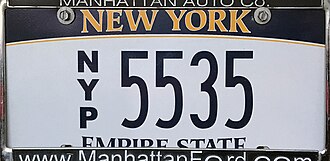
Keep the split in mind. You may confirm a plate and a class, and you may pull a status. You may not pull a home address without a permitted use. That line holds for every New York series, from a standard passenger plate to a press or commercial issue.
When a court order is required
A court order can direct the DMV to release a record that a routine request would not reach. This path appears in civil lawsuits, family matters, and certain debt cases. The judge weighs the need for the data against the privacy of the person named. Without that order, the state keeps the record closed, no matter how strong the reason seems to the requester.
Who Can Legally See Owner Data
Owner data leaves the DMV only through a set of controlled doors, and each door requires a reason the state can defend. A clerk does not hand a name across the counter on request. The record unit reads the stated purpose against the federal list, checks the identity of the requester, and decides whether the request fits. A certified copy, when one is issued, carries the state seal and confirms the facts on the record. Most refused requests never reach this stage, since the requester cannot name a use that qualifies.
The role of the DMV record unit
The record unit is the office that handles Form MV-15 and other data requests. Staff review the reason, the signature, and the documents before release. They keep the log that shows who asked, when, and for what purpose, which the state can review later. A request that names a real use, such as an insurance claim or a court matter, moves forward. A request that lists no purpose, or one that falls outside the federal list, is returned or denied. The unit does not negotiate a reason on the requester’s behalf.
What a certified copy contains
A certified record confirms the registered owner and the vehicle details the DMV holds for a plate. It does not add facts the agency never kept, such as a driver’s name, a phone number, or a criminal history. The certification matters in a legal or insurance setting, where an uncertified printout may not be accepted. The copy draws from the same registration and title files that feed a plate lookup, with the owner field released only when the stated use allowed it. The date of the record matters as much as its content, since a registration can change.
Penalties for a false request
A requester who signs for a purpose that is not true can face civil and criminal results. The federal law allows a harmed person to sue for damages and legal costs, and the state can pursue its own charges for a false statement. A business that resells data outside the stated use risks the same exposure. Signing the certification is a promise, not a formality, and the DMV keeps the paper that records it. A reason that feels harmless can still count as misuse once the record is used for something else.
Working With a Lawyer or Investigator
Lawyers, investigators, and insurers run owner searches as part of their daily work, and the rules shape how they do it. Each one ties a request to a live case, files the purpose in writing, and keeps the released data inside that case. A driver who needs a name for a legal matter usually reaches this work through a lawyer rather than a website. The pathway is narrow on purpose, since an open owner record would make every plate a tracking device. Knowing how the professional route runs helps a person spot a service that cannot deliver what it sells.
When a private investigator qualifies
A licensed investigator can request owner data for a permitted purpose, such as a civil dispute, a debt matter, or a fraud case. The investigator must hold a valid license and state the use on the form. The DMV does not release data for a general curiosity check, even to a licensed professional. A client who hires an investigator for a private reason often finds that the law blocks the request. The investigator who follows the rules files the purpose and keeps a record of the case that supports it.
How a court subpoena differs from a request
A routine record request asks the DMV to release data for a listed use. A court subpoena, or a court order, directs the agency to produce the record regardless of a routine denial. A judge weighs the need for the data against the privacy of the person named before issuing the order. This path appears in lawsuits, family matters, and certain debt cases. Without the order, the state keeps the owner field closed even when the reason seems strong to the party seeking it.
Keeping owner data secure once you hold it
A business or professional who receives owner data takes on a duty to guard it. That means limiting who inside the office can open the file, storing it behind a password or a locked drawer, and using it only for the case that justified the request. A resale or an accidental leak can trigger federal exposure. Write down the reason, the date, and the person who handled the request, then destroy the data when the matter closes. The duty follows the data for as long as it is held.
Where Owner Data Travels After Release
Once the DMV releases an owner record for a permitted use, the data does not travel freely. The person or office that asked takes on a duty to hold it for the reason stated and no other. A claim file and a court file each keep the record inside a case, and each carries a limit on who may open it. A leak or a resale breaks the terms that allowed the request in the first place.
Records Held by a Claim File
An insurer that pulls owner data for a claim keeps the record in the claim file. Staff read it to confirm the vehicle and the policy holder, and the file carries the date and the reason the record was requested. The data does not move to a marketing list or a sales file. A claim that closes leaves the record behind, and the office decides how long to keep the file under its own retention plan. The federal rule follows the data for as long as it sits in that file.
Records Held by a Law Office
A lawyer who requests owner data for a case holds it under privilege and under the DPPA at the same time. The file stays with the matter, and only the people working that matter may open it. A record pulled for one case cannot be passed to a second client for a different purpose. The office logs the request, the date, and the reason, which matches the duty the DMV places on every permitted requester. When the case ends, the file follows the firm’s own closing plan.
When the Data Should Be Destroyed
Owner data should leave the office when the reason for the request no longer holds. A closed claim, a settled case, or a finished matter marks the point. A shredder or a secure delete protects the record, and a written note of the date keeps the process honest. Keeping the data past its purpose raises the same risk as a leak, since it can be misused years later. A short retention plan keeps the record inside the terms that allowed the release.
Frequently Asked Questions
Owner searches raise the same questions year after year. The answers below follow the current DPPA framework and New York DMV practice. When a claim about plate data sounds too easy, compare it with these points before you trust it. The law has not changed in a way that opens owner addresses to the public.
Can anyone run a New York plate owner search?
No. A plate is public, but the owner record is not. Only a requester with a permitted use, a signed form, and a fee can ask the DMV to release it. A person who simply wants to know who owns a car in a parking lot has no qualifying reason under the law.
Is Form MV-15 the right form for owner data?
Form MV-15 is the standard request for motor vehicle records in New York, covering owner and vehicle data. The current version and its fee live on the DMV site, so download it there rather than using an old copy. Sign the certification with a true reason for the request.
Do paid people-search sites hold DMV records?
Most do not hold live DMV data. They gather marketing files, utility lists, and old public records, then match a name to an address that may be stale or wrong. A plate search on those sites often returns a guess. The DPPA bars a lawful sale of protected records for a casual reason.
What happens if a business misuses plate records?
Federal law allows civil suits and penalties when covered data is used or sold outside a permitted purpose. A harmed person may recover damages and legal costs. The DMV can limit a business that abuses its record privileges. A written privacy policy and staff limits reduce that risk.
How do I report a stolen plate in New York?
Call the police and file a report. The officer records the theft, and Form MV-78B is the police report that flags the plate in the DMV system. Ask for the report number and keep a copy. Then contact the DMV about a replacement, since a stolen plate can be used in crimes that land on your record.