A motorcycle in New York carries a single plate, fixed to the rear fender and nowhere else. That one-plate rule comes from the design of the machine: most bikes have no place to mount a second tag, and the state does not ask for one. Registration follows the same two-year cycle as a car, with a class M plate that is smaller than a passenger plate. Riders who know the class, the size, and the inspection duty keep their paperwork clean and avoid a roadside problem. This page walks through each rule in turn.
The rules for two-wheelers differ from those for cars in a few places. Motorcycle plates are smaller, they sit on the rear only, and the character limit for a personalized tag is shorter. A moped or a scooter falls under its own class, with plate rules of its own. Insurance, helmets, and inspection each play a part. The sections below cover registration, renewal, design choices, and the small details that keep a rider on the right side of the law. Read it before you visit a DMV office or mail a form.
Motorcycle Plates in New York
A motorcycle plate is issued as a single unit and belongs on the rear of the bike. A car carries two plates, front and rear, since the maker builds mounts for both. A motorcycle fender holds one tag, and the state writes its rule around that fact. The plate is smaller than a passenger plate so it fits the space between the tail light and the tire. The facts below cover the class, the size, and the fees a rider meets.
Registering and Renewing a Motorcycle
A motorcycle registration starts with form MV-82 and a trip to a DMV office, or a mailing when the paperwork is complete. The rider needs proof of ownership, proof of insurance, and a photo ID. A bike bought from a dealer comes with a manufacturer’s certificate of origin, and a private sale needs a signed title. The steps below follow the order the counter work moves through.
- Gather the papers
Collect the title or the manufacturer’s certificate of origin, a current insurance card, and a photo ID. For a private sale, check that the seller signed the title in the right place. A missing signature sends a rider home to start again.
- Complete form MV-82
Fill in the registration form for a motorcycle and mark the correct class. List the make, the model, and the vehicle number as they appear on the title. A clerk reviews the entries before the plate is assigned.
- Pay the fees
Pay the two-year registration charge and the plate fee. A standard plate costs $25 to buy, and the state issues the smaller motorcycle size. Sales tax may apply on a new purchase, and the clerk collects it with the rest. Keep the receipt with the registration record.
- Receive the plate and registration
The clerk hands over the registration document, and a printed plate follows by mail in most cases. Mount it on the rear with the holes the maker provides. Carry the registration with the bike for inspection at a traffic stop.
- Add insurance before you ride
New York requires liability coverage for a registered motorcycle. The insurer issues an insurance identification card that the DMV records. A lapse in coverage can suspend the registration and the plate with it.
- Plan the renewal date
Mark the two-year renewal on a calendar and watch for the notice in the mail. Keep the address on file current, since the notice drives the timing. A late renewal can add a penalty and a lapse.
- Motorcycle registration and titles:
- dmv.ny.gov/registration-and-title
- Motorcycle manuals and rider rules:
- dmv.ny.gov/motorcycle-manual
Motorcycle Registration Classes
New York puts motorcycles in class M for registration, and the class covers two-wheeled machines built for road use. A three-wheeled motorcycle and a motorcycle with a sidecar fall under the class, with a plate on the rear. The class sets the fees and the plate size, and it stays with the vehicle as long as the ownership stays the same. A rider adds a motorcycle endorsement to a driver license to operate legally, and that step is separate from the plate.
The Smaller Plate Size
A motorcycle plate is shorter than a passenger plate so it fits the narrow space on a rear fender. The reduced face holds fewer characters, which matters when a rider personalizes the tag. Letters and numbers still stand about an inch tall, so a camera or an officer can read them from a normal distance. A plate that is bent to follow the fender curve can hide the characters and draw a ticket, so mount it on a flat bracket when you can.
Personalizing and Displaying the Plate
A rider can put a chosen combination on a motorcycle plate, with the same review that applies to a car. Fewer characters fit on the smaller face, so keep the wording short. Personalization costs $31.25 to $62.50 each year, on top of the plate charge. The DMV blocks anything that reads as offensive or that copies an official series. Run the free availability check before you file, and repeat it if you change the wording.
Choosing Characters for a Smaller Face
A motorcycle plate holds fewer characters than a car plate, so a rider should sketch the wording before filing. The DMV counts a space like a character, and it blocks any blend that reads as an official series or as an insult. Avoid a mix that a driver could mistake for another plate, such as a run that copies a state police tag. Run the free availability check, and keep a second choice ready in case the first is already taken.
Displaying the Plate on the Fender
Mount the plate on the rear with the holes the maker installs, and keep it flat so the characters stay square to the road. A bracket that angles the tag upward can hide it from a following officer at night. Keep the face clear of the exhaust, the tire, and any bag strapped to the tail. New York requires the plate to sit between 12 and 48 inches from the ground, so check the height after you fit a new tail piece or lower the suspension.
Inspection and Other Small Vehicles
New York requires motorcycles to pass a safety inspection, and the state runs a motorcycle inspection program through licensed stations. The check covers brakes, lights, tires, the steering, and the exhaust. A bike that fails gets a chance to be fixed and retested within the stated period. The inspection is separate from registration, and a sticker or a record shows the result. Keep the plate clean and lit so the examiner can read it during the visit.
Renewing Motorcycle Registration
Motorcycle registration runs for two years, matching a passenger car. The renewal notice arrives before the expiration date and lists the registration charge along with the $25 plate fee when a new set is issued. A rider can renew online, by mail, or at an office. A lapse brings a penalty and can suspend the plate, and riding on a suspended registration can lead to a summons. Renew early to keep the plate and the record in good standing.
Mopeds and Scooters Compared
A moped is a low-speed two- or three-wheeled vehicle with a small engine and working pedals, and New York registers it under a class of its own. A scooter that runs on a larger engine is treated as a motorcycle. The plate and the rules shift with the class, and a rider should check the class before ordering a plate. The table below lines up the main differences.
| Vehicle | Registration class | Plate notes |
|---|---|---|
| Motorcycle | Class M | One rear plate, smaller face |
| Moped | Moped class | One rear plate, pedal assist required |
| Scooter above the engine limit | Class M | One rear plate, full motorcycle rules |
| Motor-driven cycle | Its own class | One rear plate, limited speed |
| Motorcycle trailer | Trailer class | One rear plate |
A rider who is not sure which class fits should read the vehicle’s title, since the class is written there. A moped that gains a larger engine can move up to the motorcycle class, and the plate follows the change on form MV-82. Insurance and inspection duties move with the class too. Ask a DMV clerk to confirm the class when the paperwork is unclear, before any plate is ordered.
Custom Designs Available
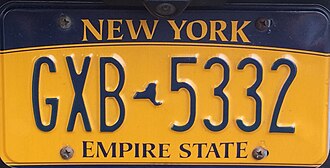
New York offers a range of designs for two-wheelers, from the standard Empire State plate to picture plates tied to causes, branches of service, and organizations. A rider can personalize the combination on many designs for an added yearly charge. A few designs are issued only with an assigned number, and the plate’s own page states that limit. The image below shows the Empire Gold design that has served as the standard series since 2010.
Ordering a design takes the same path as a car plate: run the availability check for a personalized number, then file online, by mail, or at a counter. A design that needs proof of membership or service asks for that paper with the order. Delivery runs several weeks, so a rider should keep the old plate in place until the new one arrives. A replacement plate costs $25 if the new tag is ever lost.
Plate Security and Theft
A motorcycle plate sits out in the open and can be lifted by hand, so riders see theft more often than drivers do. Report a stolen plate to police and complete form MV-78B, the police report for stolen items. The DMV then blocks the old number so it cannot be used on another bike. A replacement costs $25, and in most cases the same characters come back. A locked tag bracket slows a thief and protects the registration record.
Riding With a Plate You Can Read
Keep the plate clear of the exhaust, the tire, and any luggage strapped to the tail. New York requires the plate to sit between 12 and 48 inches from the ground and to stay readable, so a bracket that angles it upward can lead to a stop. Clean road grime off the face, since dirt hides characters and a plate reader can miss a dirty tag at a toll gantry. Check the mounting bolts after a long ride, since vibration works them loose.
Rider Endorsement and Safety Gear
Registration covers the plate, and a separate step covers the person who rides. New York issues a driver license with a motorcycle endorsement, or a stand-alone motorcycle license, and a rider needs one of the two before a bike may be operated on a public road. A learner permit limits who may ride and where. The class of the machine sets which tests apply, and a rider who moves up to a heavier bike should confirm the endorsement still covers it. Keep the license and the registration together, since a traffic stop asks for both. A rider who is stopped without the right endorsement faces a citation and can lose the bike to a tow.
The Motorcycle Endorsement on a Driver License
To add a motorcycle endorsement, an applicant passes a written test and a road test, or completes an approved rider course that waives the road test in some cases. The endorsement carries a class letter that matches the machine, and a three-wheeled motorcycle or a bike with a sidecar may fall under a different class than a two-wheeler. A rider who already holds a New York driver license keeps that license and adds the endorsement to it, and a new rider can apply for a motorcycle-only license. Carry the license on every ride, since the plate alone does not show who may operate the bike.
Helmets and Protective Gear
New York requires a helmet for every rider and every passenger, and the law does not exempt adults the way some states do. The helmet must carry a proper approval label. Eye protection is required when the bike has no windshield, and a rider should keep the face shield clean so a bug or a spray of road grit does not blind them at speed. Gloves, a jacket, and boots protect the hands, the arms, and the feet in a slide. Reflective gear helps a driver notice a rider after dark, when a single rear plate and a tail light are the only lights on many bikes. A passenger helmet follows the same rule as the rider’s.
Buying and Selling a Used Motorcycle
A used motorcycle changes hands much the way a car does, and the same caution applies. The title proves who owns the bike, and the assignment on the back moves that ownership to the buyer. A seller should sign the title exactly as the name reads on the front, and a buyer should match that name to the seller’s license. Plates belong to the owner, not to the machine, so a buyer receives a new plate with a fresh registration. A clean title and a signed bill of sale protect both sides. A quick review of the paperwork at the curb saves a second trip to the office later.
Checking a Title Before You Buy
Before money changes hands, ask to see the title and read it closely. A branded title, such as one marked salvage or rebuilt, follows the bike for life and lowers what it is worth at resale. Check that the vehicle number on the title matches the frame stamp, since a mismatch can point to a replacement frame or a stolen machine. Confirm that no lien is listed, or ask for a release from the lender if one is. An odometer reading belongs on the title at the sale, and a figure that looks too low deserves a question. Walk away from a seller who will not show the papers.
Moving Plates and Insurance to a New Bike
Plates on a motorcycle do not pass to a buyer in a private sale. The seller keeps them for a replacement bike or returns them to the DMV with form PD-7, and the buyer applies for a new registration and a new plate on form MV-82. Insurance has to be in force before the buyer rides, and the insurer issues the same identification card the DMV records. A rider who buys a second bike can often move an existing plate set to it, since the plate follows the owner rather than the machine. Confirm the plate transfer when ownership stays the same.
Motorcycle Plate Replacements and Records
A motorcycle plate lives low on the bike, where road grit, a dropped bike, or a careless wrench can damage it. New York offers a replacement set for $25, and the same characters return in most cases. The paperwork that supports the change matters as much as the plate itself, since the registration record has to match the tag on the fender. Keep the insurance card and the registration together so a traffic stop or a sale goes quickly.
Replacing a Damaged Motorcycle Plate
A cracked, faded, or bent plate should be replaced rather than straightened. File the request at a DMV office or by mail, pay the $25 replacement charge, and hand in the old tag when the new one arrives. A plate that peels within the first few years may qualify for a free exchange, so keep the receipt. The new plate carries the same number when that number is free, and the registration document is updated at the same time.
Keeping Registration Records in Order
The registration document shows the plate number, the class, and the expiration date, and it belongs with the bike. When a rider moves, the DMV needs the new address so the renewal notice arrives on time. A change of name after a marriage or a court order calls for an updated record before the next renewal. If the bike is sold, the plate comes off and the seller either moves it to a replacement machine or returns it with form PD-7.
Frequently Asked Questions
Riders ask a short set of questions about motorcycle plates. The answers below cover the single-plate rule, the class, the smaller size, the personalization limit, and the inspection duty that applies to a bike. Each answer reflects the way the New York DMV handles a motorcycle transaction.
Why does a motorcycle have only one plate?
A motorcycle carries one plate on the rear, since the machine has no factory mount for a front tag. A car has two mounts, so it carries two plates. New York writes the rule around the hardware the maker installs, and it does not ask a rider to add a second plate.
What class is a motorcycle registered under in New York?
Class M. The class covers two-wheeled machines built for the road, along with three-wheeled motorcycles and bikes fitted with a sidecar. The class sets the plate size and the fees, and it stays with the vehicle as long as the title stays in one name. A rider adds a motorcycle endorsement to a driver license separately.
Can I personalize a motorcycle plate?
Yes, within the shorter limit of the smaller plate face. The DMV reviews the combination the same way it reviews a car plate, and it blocks anything offensive or anything that copies an official series. Personalization runs $31.25 to $62.50 each year, added to the plate charge. A free availability check comes first.
Do motorcycles need an inspection in New York?
Yes. New York runs a motorcycle safety inspection through licensed stations, and the check covers brakes, lights, tires, steering, and the exhaust. A bike that fails can be repaired and retested within the stated period. The inspection is separate from registration, and a record or sticker shows the result.
What should I do if my motorcycle plate is stolen?
Report the theft to police and file form MV-78B, the police report for stolen items. The DMV then blocks the old number so it cannot be used elsewhere. A replacement plate costs $25, and the same characters are reissued in most cases. A locking bracket makes a repeat attempt harder.