

New York offers a plate for the car that spends more time under a cover than on the road. Historical plates, often called historic or antique plates, mark a vehicle that has reached a set age and is kept mainly for shows, parades, and short trips. The state ties the program to a simple age rule and a lighter set of inspection duties. A collector who files the right papers can put a period-correct plate on a car built decades ago. The rules changed little over the years, so an old car and a new one follow the same path.
This page sets out who qualifies, how to file, what a historical registration allows, and where the limits sit. It covers the 25-year rule, year-of-manufacture plates, insurance for a classic car, street rods, and the way a plate moves to a new owner. Each step matches the forms the New York Department of Motor Vehicles asks for, so a collector can gather the paperwork in one pass and avoid a return trip. Old plates, insurance cards, and a title all come into play, and the order in which you present them keeps the counter visit short.
What Makes a Vehicle Historic
A historic vehicle earns that label from its age, not from its condition or its value. New York treats a car, truck, or motorcycle as historic once it reaches 25 model years old, and the owner can then ask for a historical registration and plate. The vehicle has to be owned for personal use rather than daily business hauling. The facts below cover the age rule, the forms, the mounting standard, and the charges tied to a historical plate.
Applying and Keeping Historic Plates
The application starts with form MV-82, the same registration form used for any vehicle. The clerk needs proof that the vehicle is at least 25 years old, proof of ownership, and proof of insurance. A collector can file at a DMV office or by mail, and the historical class is entered on the registration record. The steps below follow the order the transaction unfolds at the counter.
- Confirm the model year
Check the title or the manufacturer’s tag to fix the exact model year. The DMV counts age by model year, so a car built late in one year can be titled as the next. Gather any papers that show the build date.
- Complete form MV-82
Fill in the registration form and mark the historical class. Bring the title, proof of insurance, and a photo ID. A vehicle already registered in New York moves to the historical class on the same form.
- Show proof of age
The clerk checks that the vehicle reaches 25 model years. A title states the year, and a bill of sale or a build record helps when the title is unclear. Bring the original documents rather than copies.
- Pay the registration and plate fee
Pay the two-year registration charge along with the plate fee. The DMV sets the historical charge with the class, and the receipt lists each line. Keep the receipt with the title. A collector who moves a car from a standard class to historical pays the difference the clerk calculates.
- Receive the plate
Most historical plates are printed and mailed, and the new registration document follows. Mount the plate in the rear position for most vehicles and keep it clean. Historic motorcycles carry a single rear plate. A few designs can be picked up at a district office.
- Keep records current
Tell the DMV when you move so renewals reach the right address. Keep the title, the registration, and the insurance card together. A collector who sells the vehicle returns the plate with form PD-7 at no charge.
- Historic plate rules and applications:
- dmv.ny.gov/plates/historical-plates
- Registration and title forms:
- dmv.ny.gov/forms/mv82.pdf
The 25-Year Rule
The number that matters most is 25. A vehicle becomes historic in New York once it is at least 25 model years old, counted from the year the maker assigned to the model. A car titled as a 1999 model reaches the threshold for the 2024 registration year. The title sets that year, and a mistake on it can push the plate back a year. Read the model year on the title before filing.
Year-of-Manufacture Plates
A year-of-manufacture plate is an original New York plate from the same year the vehicle was built. The state allows a collector to display it in place of the historical plate when the vehicle qualifies, and the plate has to be in readable condition with legible characters. A reproduction or a restored plate can be refused if it looks new or if the number cannot be read from a normal distance. The photo below shows an original plate from the 1970s.
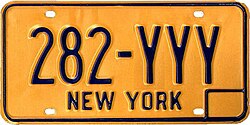
To use one, keep the historical registration active, since the year-of-manufacture plate is a display option rather than a separate registration. Carry the official historical plate or the registration document in the vehicle so an officer can match the plate to the record. If the original plate is damaged, a replacement historical plate costs $25 and the display option can continue on the new set.
Rules for Historic Vehicles
A historical registration carries limits on how the vehicle is used. The plate fits a vehicle kept for hobby and exhibition purposes rather than for daily travel or hauling goods. New York restricts operation to events such as shows, parades, and club runs, along with the trips needed to reach them. A driver who relies on the car for a weekday commute or a delivery route is outside the terms of the class and can face a citation.
Inspection Requirements
Historic vehicles follow a lighter inspection path than a standard car. A vehicle registered as historical is exempt from the yearly safety inspection that applies to most passenger cars, so long as it stays within the hobby-use limits. A vehicle that runs on the road for regular travel does not keep that exemption. The table below compares the two paths so an owner can see where the duties differ.
| Item | Standard passenger | Historical vehicle |
|---|---|---|
| Safety inspection | Yearly, at a licensed station | Exempt under hobby use |
| Emissions test | Required in the downstate program area | Not required |
| Registration term | Two years | Two years |
| Plate style | Standard or custom | Historical or year-of-manufacture |
| Use limit | Daily travel allowed | Shows, parades, and club events |
| Plate fee | $25 to buy, $25 to renew | Set with the historical class |
An owner who wants to drive the car more often can weigh a standard registration instead. A standard class brings the yearly inspection back and removes the event limits, which suits a collector who uses the vehicle for everyday errands. Moving between the two classes happens on form MV-82, and the plate types change with the class. Check the current rules before deciding which path fits the season ahead.
Insurance for a Classic Car
New York requires liability insurance for any registered vehicle, and a historic car is no exception. Many owners buy a classic or collector policy built for a car driven fewer miles each year, and the insurer issues the state insurance card that the DMV needs at registration. The card has to stay valid for the whole registration term, and a lapse can lead to a suspension. Keep a current card in the car and send a copy to the DMV when the policy changes.
Street Rods and Custom Vehicles
A street rod is a modified vehicle, often built from a pre-1949 body with modern running gear. New York registers these cars under a class of their own, and a street rod plate marks the build. The owner still proves the age of the body and shows proof of ownership and insurance. A custom or replica vehicle can register as a new make, with a state-assigned vehicle number when no factory number can be found. The DMV reviews the papers before it issues the plate.
Transferring Historic Plates
A historical plate follows the owner rather than the car. When a collector sells one vehicle and buys another that qualifies, the plate can move to the new vehicle on form MV-82, with the registration updated at the same time. The plate has to be in good condition and must show its characters clearly. A buyer cannot keep the seller’s plate, and the seller should surrender it with form PD-7 when it will not be reused.
Display and Mounting Rules
New York requires the plate to sit between 12 and 48 inches from the ground and to stay clear of mud, dirt, and anything that hides the characters. A frame that covers the state name or any letter can lead to a ticket. Most vehicles carry one rear plate, and historic motorcycles and most trailers do the same. A rear plate on a car should be lit so it can be read at night.
Costs and Renewal for a Classic
The figures worth planning for are the ones the state publishes. A replacement plate costs $25, and a custom picture design costs $60 with an assigned number or $91.25 personalized, plus a yearly fee. Personalization runs $31.25 to $62.50 each year. A historical registration runs for two years, and the renewal notice lists the plate charge when a new set is issued. Ask the clerk for the historical plate figure at the counter.
Storage and Care Between Shows
A historic car often sits for weeks between shows, so storage becomes part of ownership. A garage keeps rain and sun off the finish, and a cover that breathes lets moisture escape instead of trapping it against the paint. A battery that loses its charge over a cold month can be disconnected or kept on a trickle charger. Tires that sit in one spot for a season can flat-spot, so a car that stays parked for months benefits from a small move now and then. Loose trim, a slow leak, or a soft brake pedal is easier to catch in a quiet garage than on the shoulder of a road. A few simple habits protect a vehicle that will never see daily use.
Winter Storage and Battery Care
Cold weather is hard on a car that sleeps through it. A full tank of fuel limits condensation inside the tank, and a fuel stabilizer keeps gasoline from breaking down over the winter. Rodent damage costs more to repair than any other storage problem, so seal gaps in a garage wall and set traps away from the body panels. Park on a dry surface rather than bare dirt, which holds moisture against the underside. Start the engine only when you can let it run long enough to warm fully, since a short idle adds condensation instead of clearing it. A battery tender and a set of chocks round out a simple winter routine.
Keeping the Paint and Chrome Safe
Wash a historic car by hand with a mild soap and a soft mitt, then dry it with a clean cloth rather than letting water air-dry. Bird droppings and tree sap etch clear coat within a day, so lift them off early with warm water. Chrome and stainless trim stay bright with a light polish, and a thin coat of wax on the paint slows oxidation without hiding the finish. Keep a car covered in a garage to block dust and sun, and open the doors and the trunk on a dry day so seals do not stick shut. A soft brush clears dust from the grille and the badges without scratching them.
Papers a Collector Should Keep
A collector who keeps a folder of papers saves time at every visit to a DMV office. The title proves ownership, the registration proves the right to drive, and the insurance card proves coverage for the term in force. A bill of sale settles the sales tax figure when a vehicle changes hands. Store the originals in a safe place at home and carry copies in the car, since a title that is lost or stolen takes weeks to replace. A simple system keeps a record of every old car in one place, from the first registration to the final plate surrender.
Titles, Registrations, and Insurance Cards
The title is the single most valuable document for a historic car, and a collector should keep it away from the vehicle. A registration shows the class, the plate number, and the expiration date, and a copy belongs in the glovebox. Insurance rules in New York call for a card that lists the vehicle and the policy term, and a collector policy built for limited mileage issues the same card a daily driver carries. When a policy lapses, the DMV can suspend the registration, so mail an updated card as soon as the coverage changes. Keep each document current and together, and review the folder before every renewal date.
Records for a Vehicle That Changes Hands
When a historic car is sold, the paperwork tells the whole story of the sale. The seller signs the title, writes the price and the odometer reading, and hands the buyer a bill of sale. Plates stay with the seller, who either moves them to a replacement vehicle or returns them with form PD-7. A lien release proves the loan was paid, and a buyer should refuse any title that still lists an open interest. Photocopy the signed title and the bill of sale before they leave the house, so a record survives even when the buyer loses a page. A tidy folder makes the next transaction short.
Historic Motorcycles and Trucks
The 25-year rule covers more than cars. A collector can register a vintage motorcycle, a light truck, or a bus under the historical class once the model year reaches the threshold. Each body style carries its own plate position and its own inspection note. A rider needs a motorcycle endorsement to operate a historic bike on a public road, and a truck used to haul for a business falls outside the hobby-use limits. Read the class on the title before you file.
Registration for a Historic Motorcycle
A historic motorcycle carries one plate on the rear, as every two-wheeler in New York does. The application uses form MV-82 with the historical class marked, and the owner shows proof of age, ownership, and insurance. A rider still needs a motorcycle endorsement on a driver license, and the bike still passes a motorcycle safety check so long as it stays within the hobby-use terms. The smaller plate face limits how many characters a personalized tag can hold.
Historic Trucks and Weight Limits
A truck that reaches 25 model years can move to the historical class when it is kept for shows and club events. A truck that hauls goods for a living stays in a commercial class with a weight code, and the plate carries that code at the counter. A collector should state the use plainly, since the class and the fee follow the answer. A farm truck and a light pickup can fall into different groups.
Selling a Historic Vehicle
A historic car can change hands like any other, and the paperwork follows the same path. The seller signs the title, records the price and the mileage, and hands the buyer a bill of sale. The historical plate comes off, since a plate belongs to the owner rather than to the car. Plates that will not move to another vehicle go back to the DMV with form PD-7. A clean file shortens the counter visit for both sides.
What the Buyer Needs at the Counter
A buyer who takes over a historic car files form MV-82 and shows a signed title, a bill of sale, proof of insurance, and a photo ID. New York sets sales tax on the greater of the price paid or the book value the DMV assigns, so a low figure on the paper does not lower the bill. The buyer then applies for a historical plate or a standard plate, and the class is entered on the new record at that moment.
Moving the Plate to the Next Project
A collector who sells one historic car and buys another can often carry the plate across. The plate keeps its number and any personalization, and the office updates the registration to the replacement vehicle on form MV-82. A year-of-manufacture plate can move too when the new vehicle matches the plate’s year. A plate that will not be reused goes back with form PD-7 at no charge, and the record closes.
Frequently Asked Questions
Collectors ask a short set of questions before they file. The answers below cover the age threshold, the year-of-manufacture option, what a historical registration allows on the road, the inspection duty, and how insurance and transfers work. Read them before you gather the papers.
How old does a car have to be for NY historic plates?
At least 25 model years old. The DMV counts from the model year printed on the title, so a car titled as a 1999 model reaches the threshold in 2024. The vehicle has to be kept for hobby use rather than daily travel. A title with the wrong year can delay the plate, so check it first.
Can I use a year-of-manufacture plate in New York?
Yes, when the plate matches the model year of a vehicle that already carries a historical registration. The plate has to be an original New York issue in readable condition, with characters that a person can read at a normal distance. A reproduction or a restored plate that looks brand new can be refused. Keep the official plate with the vehicle.
Do historic vehicles need a New York inspection?
A vehicle registered as historical is exempt from the yearly safety inspection that applies to standard passenger cars, as long as it stays within the hobby-use limits. A car used for daily travel does not keep that exemption, and an owner who wants regular use should weigh a standard registration instead.
How is a classic car insured in New York?
New York requires liability insurance for every registered vehicle, and a historic car is no different. Many owners buy a collector policy built for a car driven fewer miles each year. The insurer issues the state insurance card the DMV needs, and the policy has to stay valid for the full two-year term. Send an updated card when the coverage changes.
Can I move historic plates to another vehicle?
A historical plate follows the owner, so it can move to another vehicle that qualifies. The transfer happens on form MV-82, with the registration updated at the same time. The plate has to be in good condition with clear characters. A buyer cannot keep the seller’s plate, and a plate that will not be reused goes back with form PD-7.