NY license plate fees split into a one-time purchase and a repeating renewal, and the plate charge sits on top of the registration bill rather than replacing it. A standard passenger plate costs $25 to buy and $25 to renew, personalizing a number adds a yearly figure, and a custom picture plate carries both a higher purchase price and a higher renewal. Vehicle class decides the rest of the bill, since a motorcycle, a passenger car, a trailer, and a heavy commercial truck each fall into a different registration class.
This page gathers the published levels in one place and adds the charges that often surprise drivers on a first registration, including the title fee, sales tax, and the in-transit permit used to move an unregistered vehicle. Amounts come from DMV schedules, and every figure should be confirmed with the agency before payment.
NY License Plate Fees at a Glance
The summary below lists the plate charges most drivers meet, from a standard set to a personalized custom design.
What You Pay When Plates Are Issued
A first registration bundles several charges into a single payment, and the plate itself is usually the smallest part of it. The sequence below lists what the clerk will ask for, in the order the transaction is built.
-
Registration fee, set by vehicle class
The registration fee is based on weight and class, so a motorcycle pays less than a passenger car, and a heavy commercial truck pays more than either. The registration runs for two years, and the fee is charged for that term.
-
Plate fee
A standard set costs $25. A custom picture plate costs $60 with an assigned number or $91.25 with a chosen number, and a personalized number on a standard plate adds a yearly figure instead.
-
Title fee, when a title is issued
A title fee applies when a new certificate of title is produced with the registration, which is normal for a first-time registration in the state. A transfer of an existing title follows a different path and its own charge.
-
Sales tax on the purchase price
Sales tax is collected on a vehicle purchase at the time of registration, calculated on the price paid or the assessed value, whichever the DMV applies. It is usually the largest single line on the bill.
-
Extras, including the in-transit permit
An in-transit permit costs $12.50 and covers a vehicle that has to be moved before it is registered. A replacement plate costs $25, and a plate exchange for peeling coating is free when the plate qualifies.
-
Payment, then the registration documents
The clerk takes payment in full and issues the registration documents, which show the plate number that has been assigned. The plates themselves follow by mail, and the registration sticker arrives with them.
- Registration steps and fees:
- dmv.ny.gov/registration/register-vehicle
- Plate types and published plate charges:
- dmv.ny.gov/plates
Published Plate and Renewal Levels
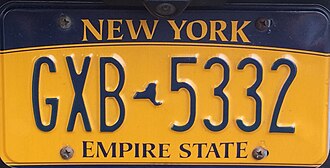
The table below sets out the plate charges in the form the DMV publishes them. The renewal column is the figure that returns with every registration cycle.
| Plate option | Initial | Annual renewal |
|---|---|---|
| Standard passenger plate | $25.00 | $25.00 |
| Personalized number on a standard plate | $31.25 – $62.50 | $31.25 – $62.50 |
| Custom picture plate, assigned number | $60.00 | $31.25 |
| Custom picture plate, personalized number | $91.25 | $62.50 |
| Replacement plate | $25.00 | — |
| In-transit permit | $12.50 | — |
Renewal figures repeat rather than replace the registration fee, and the DMV bills them every two years with that renewal. A plate that is personalised carries its extra charge for as long as the number stays on the plate, so the long-run cost of a vanity number is the yearly figure multiplied across the years the vehicle is kept. Dropping the personalization is possible at renewal, and the plate then reverts to the standard charge.
Fee Differences by Vehicle Class
Plate charges look similar across classes, but registration fees do not. Motorcycles and most trailers carry a single rear plate and a smaller registration fee, commercial vehicles pay on weight and use, and historical vehicles registered under the 25-year rule follow their own scale. Trailer registrations are renewed on the same two-year cycle, and a commercial fleet is billed per vehicle rather than per driver. The plate portion of each bill stays close to the standard level, which is why the class-based registration fee is what moves a total up or down. A driver comparing two vehicles should compare the class fees first and the plate charges second, since the class gap is usually far wider. Two vehicles that look alike on a lot can fall into different classes once weight is counted.
Weight-Based Classes
A truck or a trailer is rated on weight, so a light pickup and a heavy straight truck in the same fleet can carry very different registration fees though the plate artwork looks the same. Agricultural and dealer registrations follow their own schedules, and a dealer plate is billed per plate rather than per vehicle. Reading the class code printed on the registration certificate tells a driver which scale applies. A fleet operator who mixes light and heavy units should expect one bill per unit rather than a single flat charge.
Renewal Bills Explained
The renewal notice combines the registration fee for the next two-year term with any plate charge that attaches to the registration. A standard plate adds $25, a custom plate adds its own renewal figure, and a personalized number adds the personalization charge on top. Inspection has to be current before the renewal clears, and continuous insurance has to cover the full term, so a lapsed policy stops the renewal even when the money is paid.
The state no longer issues a fresh plate at every renewal. Plates are revalidated with a windshield sticker, and the ten-year replacement cycle decides when a new set is produced. That cycle is separate from the fee schedule, so a driver may pay the same renewal charge for years and the plate stays the same. A sticker that is current keeps the plate valid even when the metal is older than the design now issued to new registrants.
Replacement, Exchange and Transfer Fees
A replacement plate costs $25 and covers a plate that is lost, stolen, or damaged beyond the readability rule. A plate whose reflective coating is peeling is replaced free of charge when it qualifies for the exchange program, which is a different charge from a replacement and produces a new plate with the same number. A replacement keeps the same registration and the same class, so no new registration fee is triggered. A transfer, by contrast, can change the class and pull a new fee into the same transaction.
Transferring plates between two vehicles you own costs the transfer fee attached to the registration plus any change in the registration fee for the receiving vehicle. If the new vehicle falls into a heavier class, the difference is collected at the time of transfer. No fee applies to removing plates from a vehicle that is being sold, and surrendering those plates costs nothing.
Title Fees and Sales Tax
Two charges sit outside the plate schedule and are the reason a first bill looks much larger than expected. The title fee is collected when the state produces a certificate of title, which happens with most first registrations, and sales tax is collected on the purchase price of the vehicle rather than on the plate. A private sale between people is assessed on the price paid, and the DMV may apply an assessed value when the stated price falls below the market figure. Both charges are due at the counter, not at renewal. A driver who buys from a dealer often has the tax and title handled in the paperwork, and a private buyer handles both in person at a DMV office. Either way the figures land on the first bill rather than on a later notice.
Ways to Reduce the Cost
The plate is the easiest part of the bill to control. Choosing an assigned number instead of a personalized one removes the personalization charge entirely, and staying on the standard series avoids the custom plate purchase price. Dropping a personalization at renewal returns the plate to the standard charge, which saves the yearly figure for as long as the vehicle is kept. A driver who wants a design for a few years and then a plainer plate can switch at renewal rather than paying the design fee for the entire life of the vehicle.
On the registration side, staying current avoids reinstatement costs, and keeping the plate in good condition avoids a replacement charge. A peeling plate that qualifies for the free exchange program costs nothing, so it pays to check the plate against the exchange conditions before ordering a replacement.
Fee Mistakes to Avoid
Most fee surprises come from timing rather than from the schedule itself. Renewing late adds a reinstatement cost that a timely renewal would have avoided, ordering a personalized number without checking availability wastes the application, and cancelling insurance before surrendering plates can leave a lapse penalty on the record. Paying for a replacement when the plate qualifies for a free exchange is the other common waste. Asking the clerk for an itemized total before paying makes each line visible and prevents double payment.
How the Plate Charge Reaches Your Bill
The plate charge never arrives by itself. The DMV folds it into the registration transaction, so a first-time bill, a renewal notice, and a transfer each present it differently. Sorting the plate line from the registration line makes the total easier to read, and it shows which part of the bill will repeat and which part was paid once. That distinction matters most to a driver who is comparing a standard set against a custom design over the life of a vehicle, since the purchase price and the renewal figure pull in opposite directions for the two choices.
First Registration Compared With Renewal
A first registration carries the most lines since it bundles the plate, the registration term, a title fee, and sales tax into one payment. A renewal drops the title and tax lines and keeps the registration fee and any plate charge. That is why the first bill looks far larger than the notices that arrive every two years, even when the plate on the car has not changed. A driver who keeps the receipt from the first transaction can compare it against later renewals and see exactly which lines were one-time charges and which ones repeat.
Which Charges Repeat and Which Do Not
The registration fee and the plate renewal charge come back with every cycle. The plate purchase, the title fee, sales tax, and the in-transit permit are one-time amounts tied to a specific transaction. A personalized number sits in the repeating group, which is why the yearly figure matters more than the purchase price for a driver who keeps a vehicle for many years. A design fee on a custom plate behaves the same way, returning with each renewal for as long as the plate stays registered to the vehicle.
Reading the Renewal Notice
A renewal notice lists the registration fee for the next two-year term and any plate charge that attaches to the registration. A standard plate adds $25, a custom design adds its own renewal figure, and a chosen number adds the personalization charge on top. Inspection has to be current before the renewal clears, and continuous insurance has to cover the full term. A driver who receives a higher notice than usual can trace the difference to a plate or personalization line rather than to the registration charge itself.
Estimating Your Total Before You Pay
A few figures cover most of the plate bill, and the rest depends on the vehicle and the purchase. A driver can put a rough total together before reaching the counter by adding the plate charge, the two-year registration fee for the class, and any one-time item that applies. The clerk can produce an itemized total on request, which is the simplest way to check the estimate against the real numbers. Doing that math first turns a surprising total into a number the driver already expected to see.
What the Registration Fee Depends On
The registration fee follows the class and, for trucks and trailers, the weight of the vehicle. A passenger car pays a flat two-year charge, a motorcycle pays less, and a heavy commercial vehicle pays more on a scale the state publishes. The plate artwork looks much the same across those classes, so the class fee, not the plate, is what moves a total up or down. Reading the class code on the registration certificate tells a driver which scale applies before any plate is chosen for the vehicle.
One-Time Charges on a Purchase
Buying a vehicle adds charges that have nothing to do with the plate. Sales tax is collected on the purchase price or an assessed value, and a title fee applies when the state issues a new certificate. A private sale is assessed on the stated price, though the DMV may use a market figure when that price looks low. A transfer of an existing title follows a different path and its own charge. All of these fall due at the time of registration rather than at the next renewal.
Asking for an Itemized Total
An itemized total shows each line of the transaction, and the DMV can produce one on request. That list separates the registration fee from the plate charge and from the one-time items, which makes it easy to confirm that no charge has been counted twice. A driver who reviews the total at the counter can raise a question during the transaction, which is far simpler than correcting a payment after the fact.
Fees That Depend on the Transaction
The published plate figures are fixed, but the bill around them shifts with the transaction. A first registration, a renewal, a transfer, and a replacement each carry a different mix of lines, and the plate charge sits in all four. Separating the lines that repeat from the lines that are paid once makes a total easier to check against the DMV schedule before the money changes hands.
Fees on a Transfer Between Vehicles You Own
Moving a set from one vehicle to another you own carries the transfer fee attached to the registration plus any difference in the registration fee for the receiving vehicle. A move into a heavier class collects the gap at the counter, and a move into a lighter class does not refund the difference. Form MV-82 covers the transfer, and the plates have to be in displayable condition before the clerk will record them against the new vehicle.
Fees When a Plate Is Retired
There is no charge to give a set back. Surrendering plates with form PD-7 closes the registration at no cost, and a plate that is cut up after the registration is cancelled costs nothing beyond the metal. A driver should not pay a replacement fee for a plate that is being retired, since the replacement applies only to a set that will stay on a registered vehicle.
Fees That Repeat Every Two Years
The registration fee for the class and the plate renewal both return with each two-year term. A standard set adds $25, a custom design adds its own renewal figure, and a chosen number adds the personalization charge on top. Inspection has to be current and insurance has to cover the term, so a lapsed policy can hold up a renewal even when the plate line is paid in full.
Frequently Asked Questions
These answers cover the fee questions drivers ask most often, from the cheapest way to get plates to the cost of keeping a personalized number.
How Much Does a Standard New York License Plate Cost?
A standard passenger plate costs $25 at purchase with a $25 renewal. Those figures sit on top of the registration fee, which is set by vehicle class and weight, and both plate charges repeat every two years with the registration.
How Much Does a Custom or Vanity Plate Cost in New York?
A custom picture plate with an assigned number costs $60 with a $31.25 yearly renewal, and personalizing the number raises those figures to $91.25 and $62.50. Adding a chosen number to a standard plate costs $31.25 to $62.50 each year instead.
Why Is My First Registration Bill So Much Higher Than the Plate Fee?
since the plate is only one line. A first registration carries the registration fee for the vehicle class, a title fee when a certificate of title is issued, and sales tax on the purchase. Ask the clerk for an itemized total before paying.
Is There a Fee to Replace a Lost or Damaged Plate?
Yes, a replacement plate costs $25, and the same figure covers a damaged plate that no longer meets the readability rule. A plate exchanged since its reflective coating is peeling is replaced free of charge when it qualifies.
Can I Remove a Personalized Number to Lower the Renewal?
Yes. Dropping the personalization at renewal returns the plate to the standard charge, and the DMV issues a plate with an assigned number in its place. A new plate set is produced, and the standard plate fee applies.