A New York registration renewal keeps a vehicle legal for another two years. The DMV mails a notice before the term ends, and a driver may renew online, by mail, or at an office. The fee depends on the vehicle class and any plate choices. A renewal depends on current insurance and a valid inspection. Miss the deadline and the state can suspend the registration. A lapsed registration can turn a routine traffic stop into a court date. The fixes are simple once you know the order to handle them.
This page follows the full cycle, from the notice in the mailbox to the new sticker on the windshield. It covers the online steps, the mail route, the rules for inspection and insurance, and the cost of a late renewal. It covers the plate replacement rule that arrives every ten years. Keep it handy when the envelope shows up. A little planning keeps the term unbroken and the fee predictable. The sections below match the order the DMV handles a renewal, so you can follow them from top to bottom.
The two-year renewal cycle
A standard New York registration lasts two years. The term starts on the day the registration is issued and ends on the last day of the month shown on the sticker. The DMV sends a notice ahead of that date. A driver may renew any time within the window the notice describes. An early renewal does not shift your end date, so the term stays on the same two-year cycle.
The renewal notice
The renewal notice carries the details you need. It lists the plate number, the vehicle, the class, and the fee for the new term. The notice names the date the current term ends and any charge that applies. Some vehicles cannot renew online, and the notice or the DMV site states whether yours is one of them. If the notice never arrives, a driver can still renew with the plate number and the class.
Renewing online step by step
The online route is the fastest for most drivers. You need the plate number, the registration class, and the last name or business name on the record, plus a payment card. The system checks insurance and inspection before it takes the fee. If a check fails, the site explains what to fix. The steps below carry the process from start to finish. Have the notice in front of you, since a single wrong character in the plate number can send the search to another record.
- Open the DMV renewal page
Go to the official DMV site and choose the registration renewal link. Avoid a search ad that looks similar, since some third-party pages charge extra for a service the state offers at its own price. Check the address bar before you enter any details.
- Enter the plate number and class
Type the plate number as it appears on the notice and add your registration class. The system looks up the record and shows the vehicle and the fee. Confirm the make and model match your car before you continue.
- Add the name on the registration
Enter the last name or business name that appears on the registration. This step ties the payment to the correct record. A mismatch stops the renewal and asks you to check the details again.
- Pay the renewal fee
Enter a card and pay the amount shown. The fee depends on the vehicle class and any personalized plate charge. Save the confirmation number after the payment clears, and note the new end date the system reports.
- Check insurance and inspection
The site reads coverage and inspection before it finishes the renewal. A lapse in either field stops the payment. If a check fails, contact your insurer or get the vehicle inspected, then return to the same page and try again.
- Print the temporary if you need it
If the current term is about to end, print the temporary registration the site offers and carry it until the new sticker arrives. Then place the sticker as directed and keep the paper registration with the car.
- New York DMV:
- dmv.ny.gov/registration/renew-a-registration
- Forms and publications:
- dmv.ny.gov/forms-and-publications
Renewing by mail or at an office
A driver who prefers paper can mail the renewal notice with a check to the address on the form. The DMV processes the payment and mails the sticker. An office visit works too, and a clerk can answer a question about the fee on the spot. Bring the notice and proof of insurance. Mail takes longer, so send it well before the term ends to avoid a late charge.
Requirements Before a Renewal Clears
Two conditions sit in front of every renewal. The vehicle must carry active insurance, and most vehicles must have passed a safety inspection within the past year. The DMV checks both before it accepts a payment. A gap in coverage can trigger a suspension even when the driver paid the renewal fee. A lapsed inspection can stop the renewal until a licensed station issues a fresh sticker.
Late fees and suspension
A renewal that arrives after the term ends can add a late fee. If the state finds a lapse in insurance, it can suspend the registration and charge a separate fee to lift the suspension. A suspended registration is not valid, and driving on one can lead to a ticket, a tow, or a court date. Act as soon as a notice or a lapse appears.
Reinstating a lapsed registration
To restore a lapsed registration, clear the reason for the suspension first. That may mean paying a fee, filing proof of insurance, or both. Then pay the renewal. The DMV issues a new sticker once the record is clean. If the registration has been expired for more than one year, the driver must register the vehicle again rather than renew it. Ask the office which path fits your record.
Plates and Renewal
New York replaces many plate series on a ten-year cycle. The DMV mails a notice that asks the driver to order a new set even when the registration is current. The new plate keeps the same number in most cases, and the old plate comes off. The fresh plate carries reflective material that stays readable for officers and cameras.
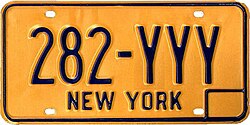
A driver who skips the plate notice may still hold a valid registration, yet the old plate can draw a warning. Order the replacement through the DMV and mount it as directed, between twelve and forty-eight inches from the ground. Keep the old plate if a rule asks for its return.
Renewing a custom or personalized plate
A custom picture plate and a personalized plate renew on the same two-year cycle as a standard plate, but the fee carries an extra charge. The yearly personalization amount appears on the notice. A driver who no longer wants the custom design may switch to a standard plate at renewal. The table shows the fee pattern.
| Plate type | Base term | Extra charge |
|---|---|---|
| Standard passenger | Two years | None beyond the plate fee |
| Custom picture | Two years | $60 assigned, $91.25 personalized |
| Personalized | Two years | $31.25 to $62.50 each year |
| Replacement plate | Two years | $25 for a new set |
| Commercial | Two years | Based on weight |
Fees can change, so confirm each amount on the DMV site before you renew. Keep the payment confirmation with the new registration. If the notice shows a fee you did not expect, ask the office to clarify the class or the plate charge before you pay.
Renewal Costs and Payment
A renewal fee follows the class of the vehicle and the plate on it, not the driver. The state sets the base for a two-year term and adds a charge when the plate carries a custom picture or a personalized combination. The notice lists the amount for your record, and the online page confirms it before you pay. A driver who swaps to a standard plate at renewal can drop the extra charge, though the custom design is then retired. Read the notice line by line so an unexpected figure does not stall the payment at the last step.
What the term fee covers
The base fee pays for the next two years of registration on the vehicle. It covers the plate record and the documents the state issues, including the new sticker and the paper registration. It does not cover sales tax on a purchase, a title fee, or a ticket. A standard passenger plate renews for $25, the same figure the state charged when the plate was first issued. The amount can change with the state budget, so the notice and the DMV site remain the source to trust over an old figure.
Personalized and custom plate charges
A personalized plate carries a yearly charge of $31.25 to $62.50 on top of the base fee, billed across the two-year term. A custom picture plate costs $60 when the design is assigned and $91.25 for a personalized version. These charges ride along with the renewal rather than standing alone. A driver who lets the personalization fee lapse can lose the combination to another applicant. Pay the full amount at renewal to keep the plate and the number together.
Refunds and overpayments
An overpayment on a renewal usually comes back as a credit or a refund, depending on how the state takes the payment. A driver who pays twice for the same term should call the DMV with both confirmation numbers and ask for the record to be corrected. The state does not refund part of a fee when a plate is turned in early or when a car is sold before the term ends. Keep every receipt, since the confirmation number is what lets the office trace a payment that went wrong.
Keeping Records and Avoiding Gaps
The difference between a smooth renewal and a suspended registration often comes down to paperwork handled in time. A temporary document, a current address, and a clear plan for a lapse each close a gap that would otherwise show up at a traffic stop or in the mail. The DMV acts on the state of its file, so a driver who keeps that file accurate rarely has a problem. The points below cover the common breaks in the chain between one term and the next.
The temporary registration
An online renewal can produce a temporary registration that a driver carries until the new sticker reaches the mailbox. The temporary covers the plate for the window printed on it, which bridges the days between the old term and the envelope. Print it and keep it in the car with the insurance card. A driver who renews by mail does not get the same instant document, so sending the payment early matters more on that path. Never drive on an expired term when a temporary could have covered the gap.
Moving and address updates
The renewal notice and the new sticker both travel to the address on file. A move that never reached the DMV sends the envelope to a home the driver left, and the term can lapse as the mail sits in an old box. Update the address as soon as you move, using the DMV channel for a change of address. Check that the registration, the license, and the insurance all show the new place. A matching record removes one more reason a renewal can go astray.
What to do after a suspension
A suspension blocks the registration until the reason behind it is cleared. That may mean paying a fee, filing proof of insurance, or both, before the renewal can proceed. Clear the cause first, then pay the renewal so the record moves forward in one pass. The DMV issues a new sticker once the file is clean. A registration that has been expired more than a year does not renew at all; the driver registers the vehicle again. Ask the office which path fits your record before you send money.
Special Cases at Renewal
Most renewals run straight through, yet a few cases need an extra step. A car that sat in a garage for a season may have a lapsed insurance record even when the owner kept paying for the plate. A leased vehicle may renew under the leasing company’s name, so the notice can arrive at a business address rather than at home. A vehicle held in a trust or a business renews under that entity. Read the name on the notice, and match it to the record before you send a payment, so the renewal lands on the right file.
A driver who moves to New York from another state does not renew a New York registration until the vehicle is registered here first. A car titled in another state keeps that title until the New York transaction is complete. Bring the out-of-state title, the insurance card, and a photo ID, then follow the same two-year cycle that applies to a local purchase. The old plate comes off once the New York set goes on, and the former state may ask for its plate back.
A vehicle that is stored, off the road, or used only in a season still needs a decision at renewal. Letting the registration lapse can lead to a suspension and a fee, and a gap in coverage can follow a driver when a new policy is priced. A driver who will not use the car for a long stretch should ask the DMV about the proper status rather than skip the payment. Handling the term on purpose keeps the record clean for the day the car returns to the road.
Trailers, motorcycles and seasonal plates
A motorcycle registration ends on April 30 each year, so its renewal follows a fixed month rather than the two-year cycle a passenger car uses. A trailer renews under its own class and weight, and it carries a single rear plate. A seasonal vehicle, such as a motor home or a boat trailer used part of the year, still has to keep the term current as long as the plate stays with the owner. Check the class on the notice, since a wrong class can change the fee.
Renewing after a lapse of more than a year
A registration that has been expired for more than one year does not renew on the usual path. The owner has to register the vehicle again, with a fresh MV-82 and current insurance, and the state may ask for the old plates. A shorter lapse can still be renewed once any suspension is cleared and the fee is paid. Ask the office which route fits the record before you send money, since the two paths take different forms.
A vehicle held in a trust or an estate
A car titled to a trust or an estate renews under the name on the record, which may differ from the person who drives it. The trustee signs the renewal and matches the payment to the trust name. A death in the family can leave the registration in a name that no longer signs, and the DMV needs the estate papers before the record moves. Keep the trust document with the title so the next renewal runs without a pause.
Reading the Renewal Notice
The notice that arrives before a term ends carries the facts the DMV will use. It names the plate, the vehicle, the class, and the fee for the new term. It states the date the current term ends and any charge that applies. A driver who reads the notice against the registration and the insurance card can spot a wrong class or an old address before the payment goes in. Keep the notice with your records rather than tossing it once the sticker arrives.
Form MV-3 and the facts it holds
The DMV sends Form MV-3 for a vehicle registration, and its fields carry the plate number, the class, and the term end. The notice notes whether the vehicle can renew online or has to go through an office or the mail. Compare the plate on the notice to the plate on the car; a mismatch points to a stale record. If the notice never arrives, a driver can still renew with the plate number and the class.
Why the class changes the fee
The fee follows the class of the vehicle and the plate on it. A pickup moved into a commercial class renews at a weight-based rate, and a car that swaps to a standard plate drops any custom picture charge. The notice shows the figure for the class on file, so a change in use that never reached the DMV can leave the wrong amount on the form. Tell the office when the use of a vehicle changes, and the next notice will show the right class.
Keeping the notice with your records
File the notice with the registration and the insurance card once the payment clears. It holds the plate number, the term dates, and the amount paid for the two-year cycle. A question months later about a fee or a class can be settled with the figures on that sheet. A driver who moves should update the address before the next cycle so the following notice reaches the right mailbox.
Frequently Asked Questions
Renewal questions cluster around timing, fees, and the rules that can stop a payment, from a missed inspection to a coverage gap. The answers below follow current New York DMV practice. Check the DMV site for the amount that applies to your vehicle class before you send any payment.
When can I renew my New York registration?
The DMV mails a renewal notice ahead of the term end, and the online system opens before the current term ends and stays open up to one year past it. You can renew online, by mail, or at an office. An early renewal does not shift your end date.
How much does a two-year renewal cost?
The base renewal depends on the vehicle class and runs on the same scale as the original registration. A standard passenger plate runs $25 to renew. A personalized plate adds a yearly charge of $31.25 to $62.50. Confirm the exact amount on your notice or the DMV site.
What stops an online renewal?
Two checks can stop it: a lapse in insurance and a missing inspection from the past year. The site reads both before it takes a payment. If either fails, fix the gap first, then return and renew. A coverage lapse can lead to a suspension even after the fee is paid.
What happens if I renew late?
A late renewal can add a fee, and a lapse in coverage can lead to a suspension with its own charge. Driving on a suspended registration can bring a ticket, a tow, or a court date. Clear the reason for the suspension first, then pay the renewal to restore the plate.
Why did I get a new plate after ten years?
New York retires many plate series on a ten-year cycle to keep the reflective material readable. The DMV mails a notice that asks you to order a new set, even when the registration is current. The plate usually keeps the same number, and you mount the new one as directed.